The studio · Rue des Colonnes, Paris
A website should be worthy of the work behind it.
A small studio in Paris, working with people who take their craft seriously and want a presence online that finally does it justice.
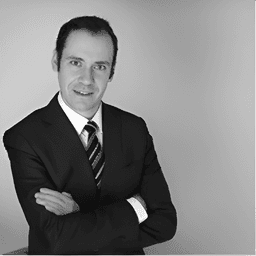
Sébastien Bel
Founder, Artdantech
Where rigour meets beauty
Before the code and the design, there were two early passions, studied side by side: law and art history. On one side the rule, the structure, the precision of an argument that leaves nothing to chance. On the other the gesture, the form, a sensitivity to what is beautiful and made by hand. For a long time I thought I had to choose. I came to understand that what truly draws me always sits where the two meet.
I find that meeting point everywhere. In a game of chess, where the strictest constraint can produce a pure kind of beauty. On the roads of cycle touring, where the effort leads to heritage and landscapes you only reach by taking your time. And now in my work, where code and design answer one another: logic in service of form, engineering in service of feeling. The difference is that together, they also let me make something.
Artdantech grew out of that encounter. It is why the studio speaks as naturally to artisans and the crafts, whose technical mastery serves beauty, as to the exacting professions, for whom precision is a daily demand. I don’t come from one of these worlds. I come from where they meet, and that is the vantage point I bring to your work.
Why this studio exists
So much remarkable work lives behind websites that don’t come close to matching it. A jeweller, a lawyer, a photographer, a craftsperson with decades in their hands, and a site that looks like an afterthought. The gap between the quality of the work and the quality of its presentation is one of the most common, and most quietly costly, things we see.
Artdantech was built to close that gap. Not another studio chasing volume, but a small practice that treats every project as a question of craft first: understanding what you do well, then building something online that carries that same standard. The beauty matters, but it follows the substance. It always does.
If you’re reading this, you probably don’t need to be convinced that presentation matters. You need someone who will treat your website with the same care you bring to your own work, and tell you honestly what it actually needs, not what sells the biggest project.
Four things we hold to on every project
Not a list of values for a careers page. These are the working principles we’re willing to defend, and to be held to, on your project.
Clarity first. If a visitor can’t tell what you do and why it matters within a few seconds, nothing else on the page gets a chance. Clear beats clever, every time. It is the quiet foundation everything else rests on.
Craft compounds. A cleaner layout, a page that loads properly, a line that finally says the right thing. None of it looks dramatic on day one. Over months, it’s the difference between a site that quietly earns its keep and one that just sits there.
Few clients, real attention. We take on a small number of projects on purpose, so yours is never waiting days for a reply or weeks for a revision. The care you feel throughout the work is the point, not a bonus.
Built to be handed over. Every project is built assuming someone else might inherit it one day. Clean structure, honest documentation, no clever shortcuts only the original developer can untangle. Your site belongs to you, fully, not to us.
Who we do our best work with
Saying yes to everyone is how a studio loses its edge. Here’s where we’re genuinely the right choice, and where we’re honestly not.
A good fit when you have real expertise or a real craft, and a site that doesn’t reflect it yet; you care more about what the site conveys than about chasing the latest trend; the person deciding is part of the conversation; you’d rather hear a candid opinion than comfortable reassurance.
Probably not a fit when the lowest quote wins, whatever the scope; you need a template lightly customised by Friday; every decision has to pass through a committee; you’re looking for a pair of hands to execute a fixed brief, not a partner to think it through.
What the first weeks look like
A website is a commitment, and the early steps are where the risk lives. Here’s how we take that risk off the table before any real building begins.
- First, we listen. Understanding the work, not just the brief. We spend real time on what you do, who you do it for, and what makes your work worth choosing. The design grows out of that understanding. It never comes first, and it never comes from a template.
- Then, a prototype. Something you can actually click. Not a flat mockup: a working prototype in your browser, built around your real content and how people will actually move through it. You feel the experience before a single line of production code is written.
- Then, we build. Production, with the decisions settled. By the time we touch production code, the major choices are made. No scope creep, no late surprises, no last-minute additions that derail the timeline. That discipline is just another word for respecting your time and your budget.
Serious about your data. Quietly.
No compliance checklist to wade through, but here’s what’s actually in place when your project and your credentials sit on our side of the table.
In place. Full-disk encrypted Linux environments. Hardened connections and strictly scoped access. Encrypted backups and reviewed storage practices.
Around it. Practices modelled on recognised security baselines, with no certification we haven’t earned. Full confidentiality on exchanges and deliverables. NDA-ready workflows for sensitive projects.
9 rue des Colonnes, which got there first
The studio sits on a short street in the 2nd arrondissement, between the Opéra and the old stock exchange. It exists because four people bought the land in 1790 as a property venture: a deed, a partnership, and the usual clauses. One of them, Jean-Baptiste Saint-Jean, was condemned to death by the Revolutionary Tribunal in June 1794 for speculating on assignats, the paper currency of the Revolution. His share was seized by the nation.
What went up on that land was a Greek temple. Nicolas-Jacques-Antoine Vestier drew a street of Doric colonnades copied from the temples at Paestum; Joseph Bénard built them. Paris had seen nothing like it, and it went on to prefigure the covered arcades of the following century and the colonnades of the rue de Rivoli.
A contract, a courtroom and an antique order, inside a hundred metres of pavement. We did not choose the address for the story. We found the story afterwards, and found it had been making our argument since 1790: that rigour and beauty are not opposites, and that the interesting work happens where the two are made to share a wall.
We receive there by appointment. The room is shared with others, so a date is arranged with us rather than simply booked.
The story behind the name
The name wasn’t invented for a brand. Artdante has been with me for as long as I can remember, long before the studio: art, and Dante, the poet whose work is an architecture of absolute rigour in service of a sublime vision. Beauty and structure, already, in a single word. When I turned that passion into a profession, all I had to add was tech. Artdantech isn’t an acronym. It’s an identity that became a studio.
A word that leans the wrong way
That added word is drawn differently from the rest. Look at tech in the logo: it leans left. Backwards, towards Artdan, towards the art. Since the first Venetian italics of the 1500s, a sloped letter has leaned forward, into the reading. Ours leans back, into what came before it. It is the only place in the identity where our position is stated without being said.
No typeface does this. Slanting an existing italic to the left takes about three seconds and costs it fourteen per cent of its stroke weight: the axis of contrast tips over, the joints crush on one side while they open on the other. Your reader has no words for any of that. They see it anyway. So the four letters were drawn again, one at a time, and the spaces between them measured rather than guessed.
One detail decides the whole thing. The entry and exit strokes still travel to the right, in the direction of writing. The stems lean back; the pen moves forward. Without that, the word would look as though it were reversing.
Four letters, a few hours’ work. This page opens with a claim, that a thing should be worthy of the work behind it. It seemed only fair to test it on our own name first.
Tell us about the work you want to show better.
Thirty minutes. No slides, no pitch, no pressure. We listen, ask a few awkward questions, and tell you honestly whether we’re the right people to help, or who might be a better fit if we’re not.
A reply within one working day · No obligation · Straight answers only